


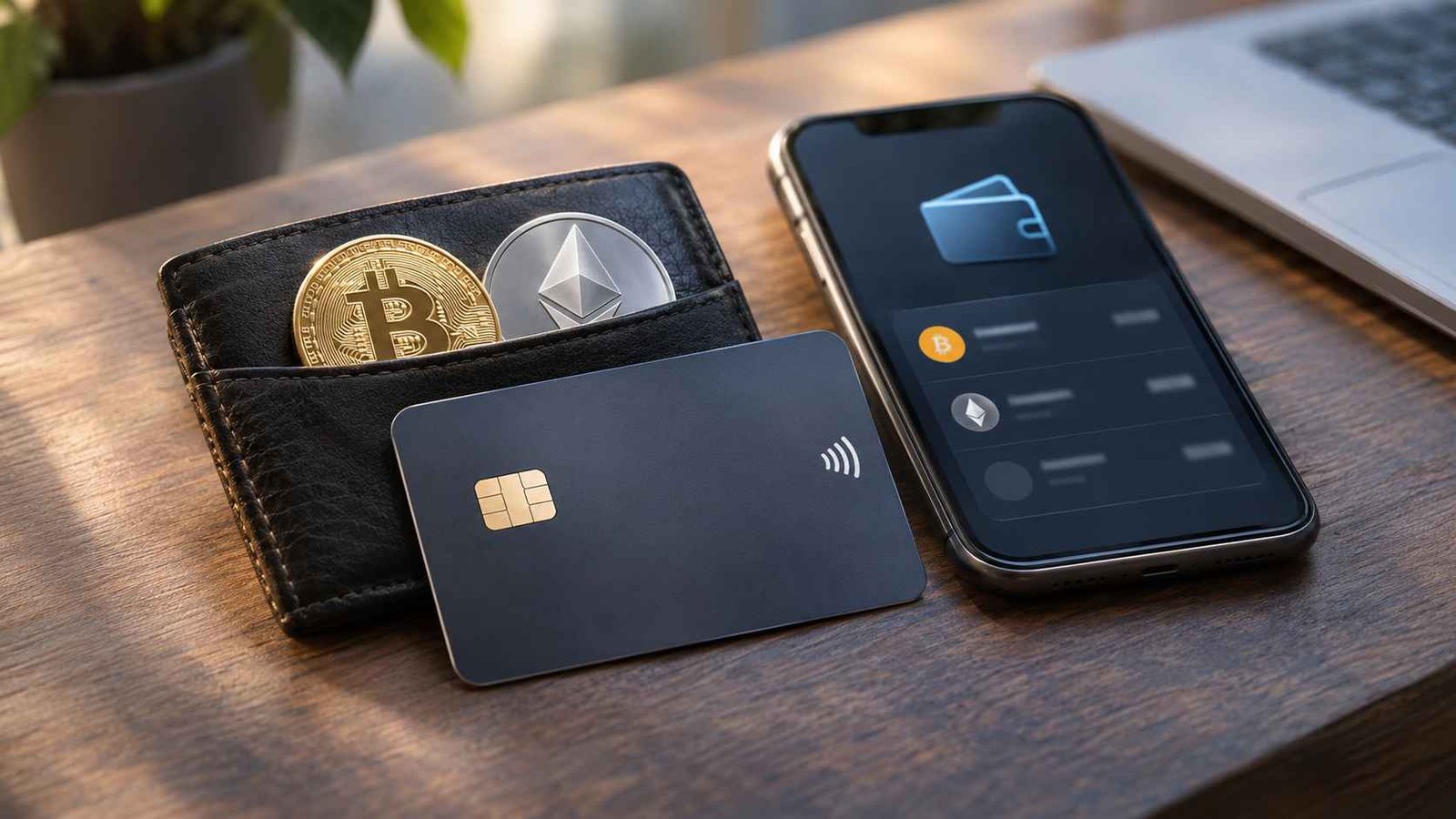
An estimated 770 million people owned crypto in 2026, up from 659 million in 2024. But owning crypto and being able to use it for everyday purchases are still two different experiences.
Crypto cards have started to bridge that gap by letting people spend their assets wherever regular cards work. Now, more wallet products are adding cards, bringing holding and spending into the same app. And there are three practical reasons this combination is gaining relevance for consumers.
#1 Your crypto balance becomes easier to spend
The Payments Innovation Tracker reports that 42% of surveyedstablecoin holders want to use digital assets for major purchases, yet only 28% currently do. That gap reflects several barriers, including fragmented payment experiences. Funds can be available in a wallet while still requiring a transfer to another service before they’re ready to spend.
An integrated card shortens that funding process and simplifies the general experience. You can convert (manually or automatically) your crypto into fiat inside the app and do everyday shopping. The conversion remains, but it becomes part of managing the funds they already hold, alongside receiving, sending and swapping assets.
That becomes useful when purchases are routine. OKX’s European data for 28 January–26 February 2026 shows groceries accounted for 26% of its reported transaction mix, restaurants and fast food together 18%, and online marketplaces 13%. CEX.IO’s data shows 45% of its European card transactions are under €10, and 40% happen online, against 21% across the euro area. These patterns suggest crypto cards are finding a place in ordinary spending, where repeatedly moving funds between services can become a chore.
For someone regularly receiving crypto, wallet integration brings incoming payments and card funding into the same workflow. You can allocate part of a payment for expenses where you already manage the balance, rather than moving between separate services.
#2 You can use crypto without asking merchants to accept it
Making your crypto easier to spend solves one problem. But what happens when you want to pay at a store that doesn’t accept crypto? That’s why access to established card networks matters:
- Visa reports more than 175 million merchant acceptance locations worldwide
- Mastercard reports more than 150 million
Supported wallet-linked cards use these existing checkouts, giving users spending access without building a separate network of crypto-friendly businesses.
The difference matters in the euro area. The ECB’s 2026 survey of 8,205 companies found that just 0.2% of online sellers accepted crypto-assets, compared with 82% accepting cards. At physical locations, card acceptance reached 88%. Wallet + card connects crypto balances to the payment method businesses already support.
The merchant receives local currency through its usual card processor; the card service handles the crypto conversion. Compatible cards, like Binance card, Utorg crypto card or Bybit card can also work through Apple Pay or Google Pay, letting users pay with a familiar phone tap. The ECB found that 68% of businesses with physical locations accepted mobile payments, although that category includes several payment methods.
That is a practical reason this combination of wallet and card within one product can gain users: it makes funds managed in a crypto wallet useful without requiring merchants to adopt crypto alongside them. But spending access leaves another question: who controls those funds before you pay?
#3 You can keep control of the crypto you aren’t spending
For users who choose a self-custodial wallet, control over their funds is part of the product’s value. Adding spending shouldn’t require transferring their entire balance to a company-controlled account. A connected card can let them keep their holdings in the wallet and make only a chosen amount available for purchases.
How much control remains depends on the funding model:
- With top-ups, users transfer a spending budget to the card. The remaining wallet assets stay self-custodial; the topped-up funds fall under the card provider’s terms.
- With direct wallet spending, users authorise access to supported assets and can set spending limits, without necessarily transferring funds into a separate account beforehand.
This gives wallet + card a reason to appeal to existing crypto users: they can add everyday spending while preserving control over assets they intend to hold. The wallet remains the home for their funds, rather than becoming a temporary stop before everything moves to another provider.
The card still relies on an issuer and payment network. Self-custody applies to the wallet assets, not automatically to every balance shown in the app. That distinction determines whether integration preserves the benefit that brought the user to the wallet in the first place.
What will make wallet and card stick?
Wallet + card gives crypto products something speculation alone cannot guarantee, a reason to return for recurring financial needs. That makes the combination a credible candidate for lasting consumer adoption.
The evidence is promising, but evidence of everyday card use doesn’t establish which wallet integrations people will stick with. That will depend on the experience after signup, when conversion costs, payment reliability and support become more important than the launch offer. Products that perform well there have a chance to become part of users’ regular finances.