

For decades, most businesses treated electricity as a fixed part of doing business. You connected to the grid, paid the monthly bill, and hoped prices stayed manageable.
That approach is starting to feel less comfortable.
Energy costs can rise unexpectedly. Power outages can interrupt operations. Growing facilities often need more electricity than they did just a few years ago. At the same time, businesses are under increasing pressure to improve efficiency and reduce their environmental impact.
All of this is changing the way companies think about power.
Instead of viewing electricity as something that simply arrives through the utility grid, more business leaders are asking how they can gain greater control over where their energy comes from, how much it costs, and what happens when the grid struggles.
Traditional utilities still play an essential role, but they are no longer the only option available.
Depending on the Grid Can Create Real Business Risks
Most businesses rarely think about electricity until something goes wrong.
Then everything changes quickly.
A short outage might be a minor inconvenience for an office. For a manufacturer, warehouse, healthcare facility, data center, or retailer, however, losing power can interrupt production, delay orders, shut down equipment, and create expensive downtime.
There is also the issue of rising electricity costs.
Businesses often build budgets months or even years in advance. When energy prices fluctuate, those forecasts become harder to manage. A sudden increase in utility costs can reduce margins and force companies to move money away from other priorities.
Grid capacity is another growing concern.
As businesses electrify equipment, install electric vehicle chargers, expand facilities, and rely more heavily on digital systems, electricity demand continues to increase. In some locations, the local grid may struggle to provide new capacity quickly.
That leaves companies asking an important question.
Should something as important as energy remain completely outside their control.
Businesses Want More Control Over What They Pay
Predictability matters in business.
Finance teams want to understand future expenses. Operations teams want reliable infrastructure. Leadership wants fewer surprises.
Energy can make all three harder.
This is one reason distributed energy is attracting more attention. Instead of purchasing every unit of electricity from the traditional utility grid, businesses can generate or store some energy closer to where it is actually used.
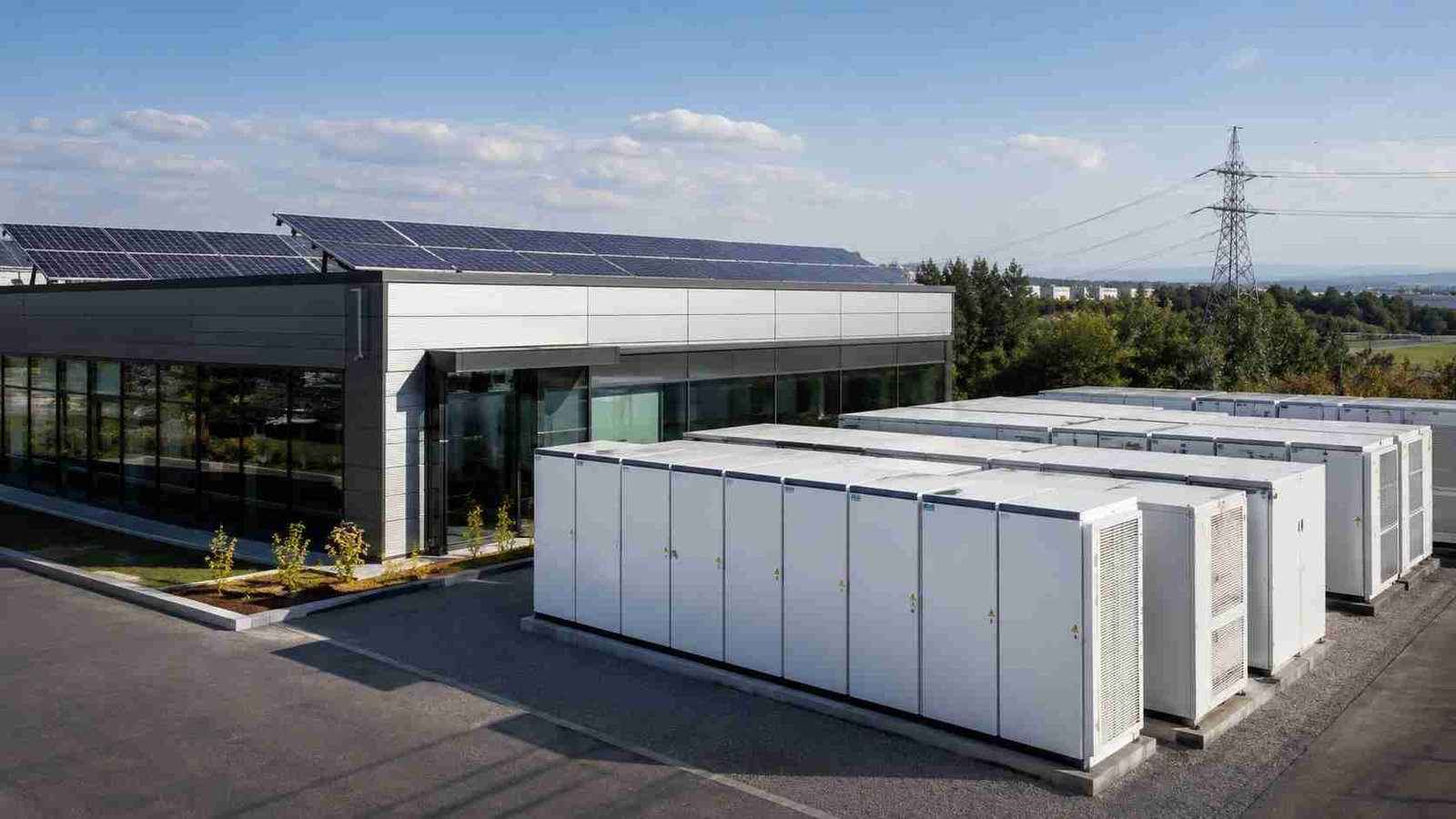
That might include rooftop or ground mounted solar systems, battery storage, fuel cells, generators, or a combination of technologies.
The goal is not always to disconnect from the utility.
In many cases, the smarter approach is to use distributed energy alongside the existing grid. The business still benefits from utility service, while gaining another layer of flexibility.
That flexibility can become valuable when electricity prices increase, demand spikes, or the grid experiences problems.
Distributed Energy Gives Companies More Choices
There is no single energy system that works perfectly for every organization.
A warehouse with a huge roof may have a strong opportunity for solar generation. A facility with expensive peak demand charges may benefit from battery storage. A business that cannot tolerate interruptions might place greater value on backup generation or a microgrid.
That is why companies increasingly look at energy as a combination of technologies rather than one isolated product.
Businesses researching these options can look at providers such as recpower.com, which works across multiple distributed energy technologies instead of assuming that every facility needs the same type of solution.
That broader approach matters.
Energy needs depend on operating hours, electricity consumption, location, utility pricing, available space, reliability requirements, and long term business plans.
A solution that makes sense for a manufacturing plant may not make sense for a hotel. A system designed for a distribution center may look completely different from one built for an office campus.
The best energy strategy usually starts with understanding the business itself.
Reliability Is Becoming a Financial Issue
Power reliability used to sound like a facilities management concern.
Today, it increasingly belongs in financial conversations too.
Consider what happens when a business loses electricity for several hours. Employees may be unable to work. Equipment may stop running. Online systems can become unavailable. Refrigerated inventory might be at risk. Customers may leave.
The financial impact can build surprisingly fast.
For some companies, the cost of a single serious outage can be much greater than the cost of preparing for one.
That is where technologies such as batteries, generators, fuel cells, and microgrids become interesting.
They can provide additional sources of power or help businesses maintain important operations when the wider grid experiences trouble.
Of course, resilience has a cost.
Companies still need to compare the investment with the potential benefits. But the calculation becomes easier when businesses consider the real cost of downtime rather than looking only at equipment prices.
Sustainability Still Has to Make Business Sense
Environmental goals have become part of corporate planning for many organizations.
Customers care about sustainability. Investors pay attention to it. Employees increasingly expect businesses to take environmental responsibility seriously.
But companies still have bills to pay.
That means clean energy projects usually need to achieve more than a sustainability target.
They need to work financially and operationally too.
Solar energy, for example, can help reduce reliance on purchased electricity while supporting sustainability goals. Battery storage can help businesses use electricity more strategically. Microgrids can combine several technologies to improve resilience.
The strongest projects often solve several problems at once.
They can reduce exposure to utility costs, support reliability, improve energy flexibility, and help companies move toward environmental targets.
That is much more appealing than investing in technology simply because it sounds green.
Flexible Energy Strategies Are Becoming More Attractive
The conversation around business energy is often presented as a choice between the traditional grid and alternative energy.
In reality, it does not have to be either one.
Many businesses will continue using utility electricity while adding on site generation, storage, or backup power.
That hybrid model can provide flexibility without requiring companies to completely change how they operate.
It also gives businesses room to adapt.
Electricity prices may change. Regulations may evolve. A company may expand. New equipment may increase power demand. Sustainability targets may become more ambitious.
A flexible energy system can respond to those changes more easily than a rigid one.
And that may be the biggest reason businesses are looking beyond traditional utilities.
They want options.
Before Changing Your Energy Strategy, Ask the Right Questions
Every business should start with its own numbers.
How much electricity does the organization currently use, and when is that electricity consumed.
What would a four hour outage actually cost.
Are demand charges a major part of the utility bill.
Is the business planning to expand its facilities or electrify more equipment.
Are customers, investors, or internal leadership pushing for stronger sustainability performance.
These questions help companies understand what they actually need.
From there, businesses can evaluate technologies based on real operating conditions instead of assumptions.
Sometimes solar may provide the clearest value. In other situations, battery storage or resilient generation may matter more. Some facilities may benefit from combining several technologies.
The answer depends on the business.
Smarter Energy Planning Is Becoming Smarter Business Planning
Traditional utilities are not disappearing.
They will continue to provide the foundation of electricity systems for businesses across the country.
What is changing is the assumption that companies must depend on them for everything.
Businesses now have more ways to produce, store, and manage energy directly. Those choices can help organizations improve reliability, gain greater control over costs, and prepare for future growth.
Energy decisions are also becoming closely connected with financial planning, risk management, sustainability, and operations.
That makes them much bigger than a monthly utility bill.
For business leaders, the real question is no longer whether electricity matters strategically.
It clearly does.
The more useful question is how much control the business wants over one of the resources it depends on every single day.