


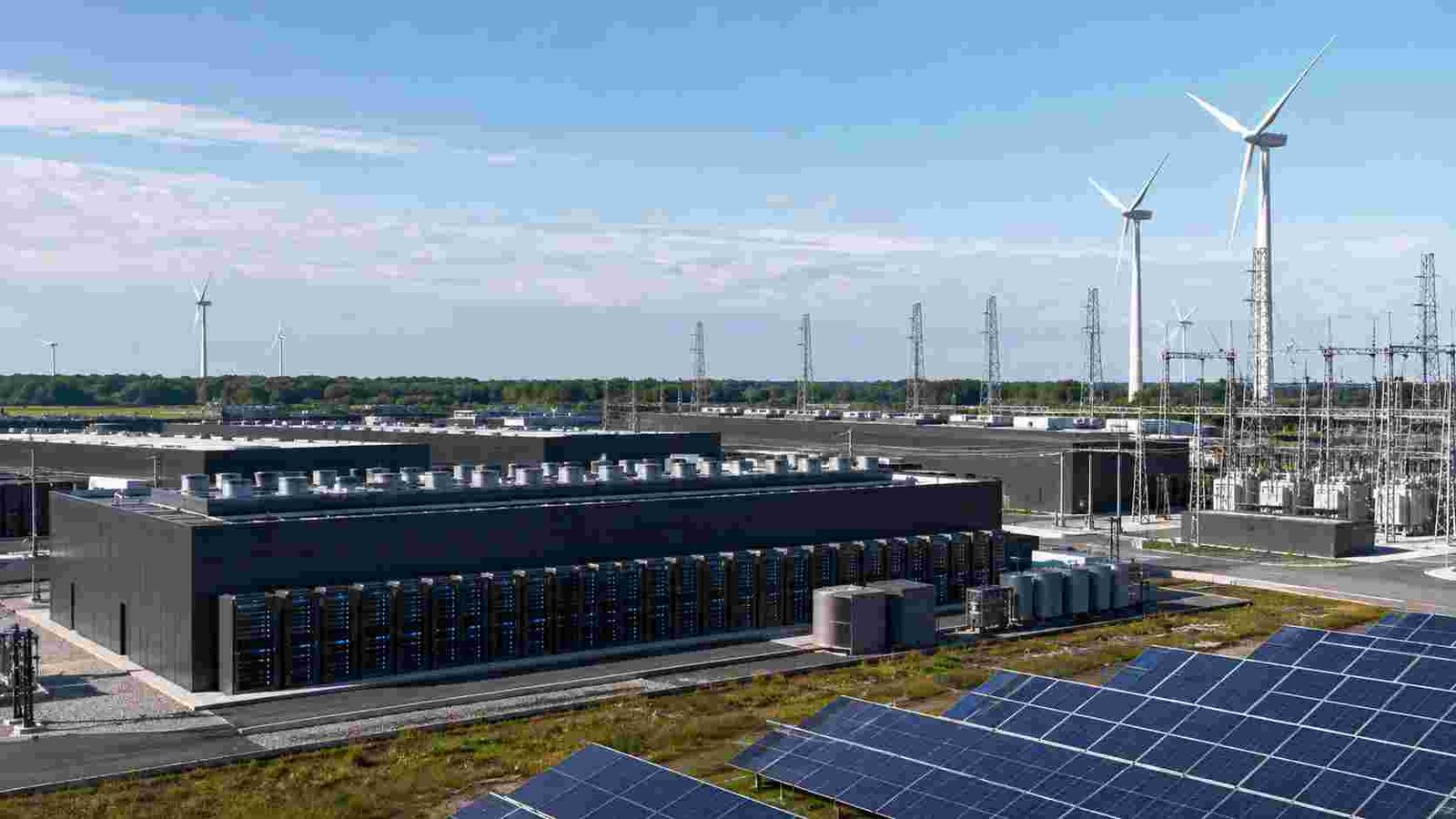
Artificial Intelligence (AI) is changing the way businesses operate, but behind every AI model is a massive infrastructure that requires significant computing power. From large data centres to advanced chips, AI systems consume enormous amounts of electricity, increasing demand for reliable, sustainable energy sources.
As companies continue to invest in AI infrastructure, the demand is no longer limited to technology companies. Along with AI stocks, investors are also paying attention to clean energy companies. As AI systems require a large amount of electricity to operate, they are creating new opportunities for businesses involved in renewable energy and power infrastructure.
Why AI is increasing energy demand
As the use of AI continues to grow, so does the number of data centres. AI applications require large data centres to process vast amounts of data. These facilities run continuously and consume a significant amount of electricity to operate their servers and cooling systems.
This is increasing the demand for electricity and encouraging companies to look for cleaner and more reliable energy sources to meet their growing power needs.
How AI and clean energy are connected
The rising growth of AI is also increasing the demand for electricity. Every new data centre needs a steady supply of power to keep its servers running day and night. As more companies expand their AI infrastructure, meeting this growing power requirement is becoming equally important. Relying only on conventional sources of energy may not be enough to support this demand in the long run.
As such, many companies are now turning towards renewable energy. Sources such as solar and wind can provide a cleaner and sustainable electricity supply over time. They will also enable companies to meet the growing need for energy and reduce reliance on traditional power sources.
Along with renewable energy, companies are also investing in battery storage and power infrastructure to ensure electricity is available whenever it is needed. As AI infrastructure continues to expand, businesses involved in clean energy and power infrastructure are also likely to benefit from this long-term demand.
AI Growth is driving semiconductor demand
AI does not depend only on electricity. It also requires advanced semiconductor chips that help process large amounts of data and power AI applications. This impacts semiconductor stocks. Advanced chips are needed to train AI models and run data centres efficiently. As more companies invest in AI infrastructure, the demand for these chips is also increasing.
With increasing adoption of AI, semiconductor companies are also seeing higher demand for their products, making them an important part of AI infrastructure. The growing demand for semiconductor chips also increases the need for a reliable power supply, strengthening the connection between AI infrastructure, semiconductor companies and clean energy.
Looking Beyond AI
Large technological shifts often create opportunities for businesses that support the entire ecosystem rather than just the companies leading it. As AI continues to grow, investors may also benefit from looking beyond companies that are directly building AI products.
For example, AI stocks may continue to attract attention as AI adoption grows. At the same time, semiconductor stocks can also remain in focus because advanced chips are essential for AI applications. Similarly, companies involved in power generation, renewable energy and electricity infrastructure may benefit as the demand for reliable energy continues to rise.
Looking at different sectors instead of concentrating on just one can help investors build a more balanced investment approach. It will also help them to better understand how AI is influencing multiple industries.
Conclusion
The rise of AI is creating opportunities across multiple industries, not just technology. Growing investments in AI infrastructure are increasing the demand for advanced chips, reliable electricity and cleaner energy sources.
With technology, clean energy and semiconductor companies are also becoming an important part of the story. Instead of focusing on a single sector, traders must focus on the broader ecosystem to understand how AI is shaping future investment opportunities.