


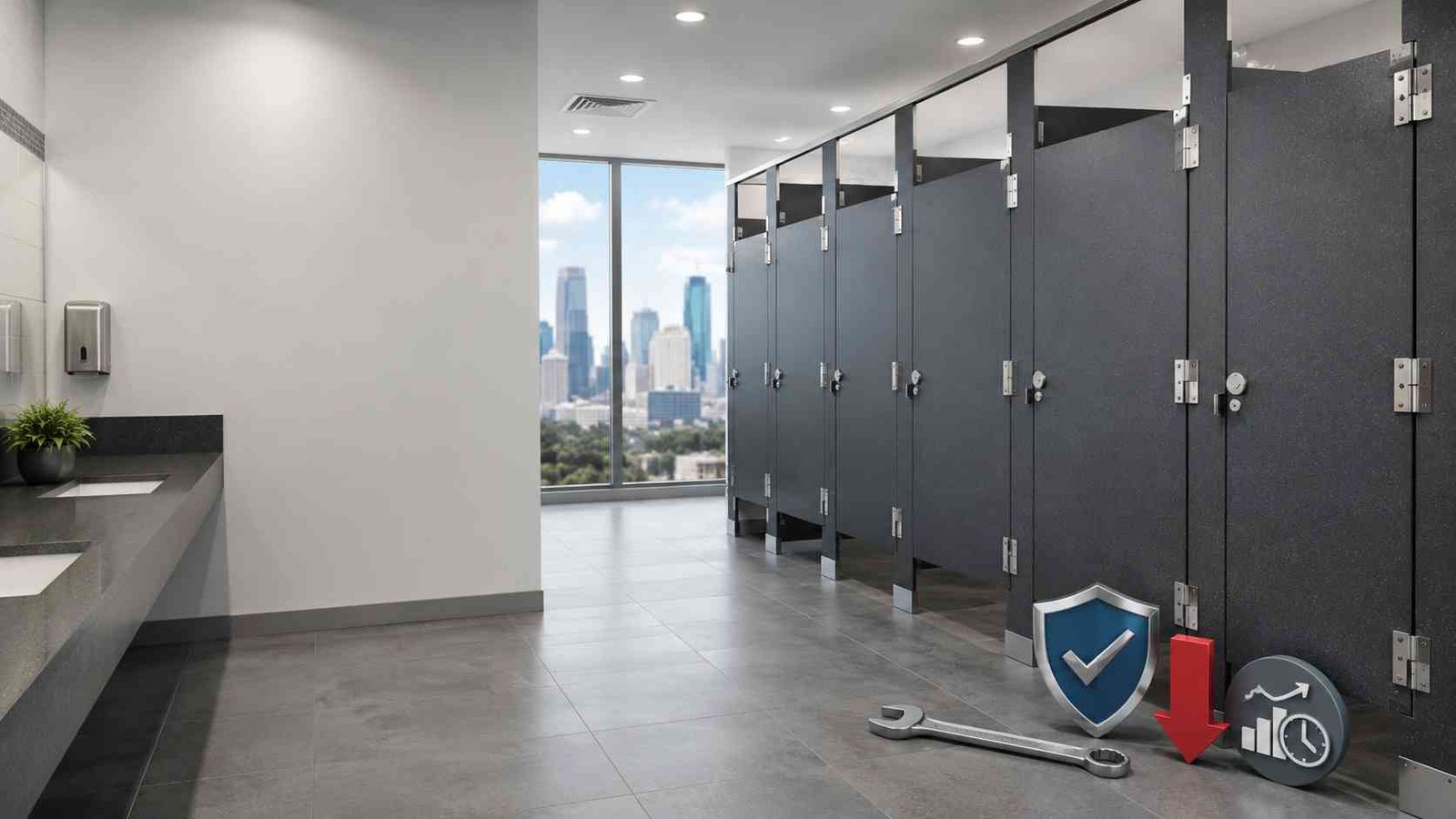
Commercial restrooms rarely get much attention until something goes wrong. A door stops closing properly. A latch breaks. A panel starts showing damage. Suddenly, what seemed like a small maintenance issue turns into another repair bill and another item on the facility manager’s list.
That is why durability matters more than it might seem.
When a business renovates or builds a restroom, it is tempting to focus on the upfront price. That makes sense. Budgets matter. But the cheapest option on installation day is not always the least expensive choice over the next several years.
A better way to think about bathroom partitions is to ask a simple question. How much will they cost to own, maintain, repair, and eventually replace?
That is where durable materials can make a real difference.
The Real Cost Goes Beyond Installation
The price you pay for bathroom partitions is only the beginning.
Once they are installed, they have to deal with daily use, regular cleaning, moisture, accidental impacts, scratches, loose hardware, and sometimes rough treatment. In a busy commercial building, that wear can add up quickly.
Every repair has a cost. Sometimes it is a replacement latch. Sometimes it is a hinge adjustment. Sometimes a damaged panel needs more serious attention.
One repair may not seem like much. Ten repairs over a few years can tell a different story.
There is also the cost of labor. Someone has to inspect the problem, order parts, schedule the repair, and complete the work. If the restroom has to be partially closed while repairs are being made, the disruption matters too.
So when comparing partition systems, it helps to think beyond the purchase price.
The real question is value over time.
Durability Can Reduce Repeat Expenses
A durable partition system is not valuable simply because it feels stronger. Its real benefit is that it may require less attention over its useful life.
Think about a restroom in a busy restaurant, school, office building, or retail center. Doors may open and close hundreds of times a day. Locks are constantly being used. Panels are cleaned again and again.
That is a lot of stress on a fairly simple system.
Materials designed for demanding environments can stand up better to repeated use, moisture, dents, scratches, and other common forms of wear.
Fewer problems usually mean fewer service calls.
And fewer service calls can mean lower maintenance costs.
Simple enough.
Maintenance Matters More Than People Expect
Cleaning is another part of the cost equation.
Commercial restrooms need regular attention, especially in high traffic buildings. Some surfaces are easier to clean and maintain than others. Certain materials handle moisture well, while others may require more care to avoid swelling, corrosion, staining, or surface damage.
That difference can affect how much time staff spend maintaining the restroom.
A surface that is easy to wipe down and resistant to everyday damage can make routine cleaning simpler. A material that needs frequent touch ups or repairs can create more work.
You might save money at the beginning, but are you creating extra maintenance work for the next five or ten years?
It is worth thinking about.
Houston Conditions Can Influence Your Choice
Local conditions matter too.
Houston is known for heat and humidity, and commercial restrooms can experience plenty of moisture on top of that. Depending on the building, the restroom may also serve a high number of employees, customers, students, patients, or visitors every day.
That makes material selection especially important.
When comparing Houston restroom partitions, facility managers can look beyond appearance and upfront price to consider moisture resistance, expected traffic, cleaning requirements, and the long term maintenance needs of each material.
Those practical details can have a much bigger impact than color or style alone.
The goal is not to choose the most expensive product available. It is to choose something suited to the space.
Different Materials Work for Different Buildings
There is no single bathroom partition material that works perfectly everywhere.
Powder coated steel is common in commercial buildings because it offers a balance between cost and everyday performance. It can be a practical option for facilities with moderate traffic and controlled indoor conditions.
Plastic laminate offers plenty of design options and can work well in spaces where appearance matters. However, moisture exposure should be considered carefully when deciding where it makes sense.
Solid plastic is often chosen for demanding environments because it handles moisture and frequent use well. The initial price may be higher, but the reduced need for repairs or replacement can make it appealing for busy facilities.
Phenolic partitions are another durable choice. They are known for moisture resistance and strength, which can make them useful in high traffic commercial settings.
Stainless steel offers a clean appearance and strong performance. It is often used in properties where durability and visual quality are both priorities.
The important point is not that one material is better than all the others.
It depends on the building.
High Traffic Changes the Math
A restroom used by twenty people a day has very different needs from one used by hundreds.
That seems obvious, but traffic levels are sometimes overlooked when businesses choose fixtures and partitions.
High traffic puts extra pressure on hinges, doors, latches, brackets, and panels. Over time, even small weaknesses can become noticeable.
For a busy facility, spending a little more for materials designed to handle frequent use may reduce headaches later.
For a smaller office with limited restroom traffic, a more affordable material may provide perfectly good value.
Matching the material to the actual use of the restroom is usually smarter than automatically choosing the lowest quote.
Do Not Forget About the Hardware
Panels get most of the attention, but hardware matters just as much.
A bathroom partition is a system. Hinges, locks, brackets, fasteners, and other components work together to keep everything stable and functional.
Cheap or poorly matched hardware can create problems even when the panels themselves are in good condition.
A loose hinge can cause a door to sag. A weak latch can become frustrating for users. Damaged brackets can affect stability.
Good hardware can help extend the life of the entire setup.
It also helps when individual components can be replaced without removing large sections of the partition system. Small, straightforward repairs are easier to manage than major renovation work.
Think in Years Instead of Days
When reviewing quotes, it is natural to look at the total at the bottom of the page.
But try looking a little further ahead.
Imagine one partition system costs less today but requires regular repairs. Another costs more upfront but needs fewer repairs and lasts longer.
Which one is actually cheaper?
The answer depends on several things, including expected lifespan, traffic, maintenance requirements, replacement costs, and the availability of parts.
This is why total ownership cost is useful.
It encourages you to look at the full life of the product, not just installation day.
Watch for Signs Your Current Partitions Cost Too Much
Older restroom partitions often give warning signs before they become a major problem.
Maybe hinges keep coming loose. Maybe latches need constant adjustment. Perhaps panels are swelling, rusting, cracking, or showing heavy damage.
Cleaning may also be getting harder.
At some point, repeated repairs stop being economical.
If maintenance teams are fixing the same issues again and again, it may be worth comparing the cost of continued repairs with replacement.
There is no universal point when replacement becomes necessary. Every property is different.
But recurring maintenance is usually a signal worth paying attention to.
Make the Decision Based on How the Restroom Is Used
Choosing commercial bathroom partitions does not need to be complicated.
Start with the basics.
How much traffic does the restroom receive? Is moisture a major concern? How often will the space be cleaned? What kind of maintenance can your team realistically handle? How long do you expect the system to remain in place?
Answering those questions makes it easier to narrow down the options.
Price still matters, of course. It simply should not be the only factor.
A slightly higher upfront investment can sometimes lead to fewer repairs, less disruption, and a longer useful life.
A Better Long Term Investment
Saving money does not always mean buying the cheapest option.
Sometimes it means buying something you will not have to keep fixing.
Durable bathroom partitions can reduce maintenance demands, limit repeat repairs, and help commercial restrooms stay functional and presentable for longer. For Houston businesses managing busy facilities, those benefits can add up over time.
The smartest approach is to choose partitions based on the conditions they will actually face.
Think about traffic. Think about moisture. Think about cleaning. Think about the years ahead, not just the installation invoice.
That is how a simple restroom decision can become a smarter long term investment.