


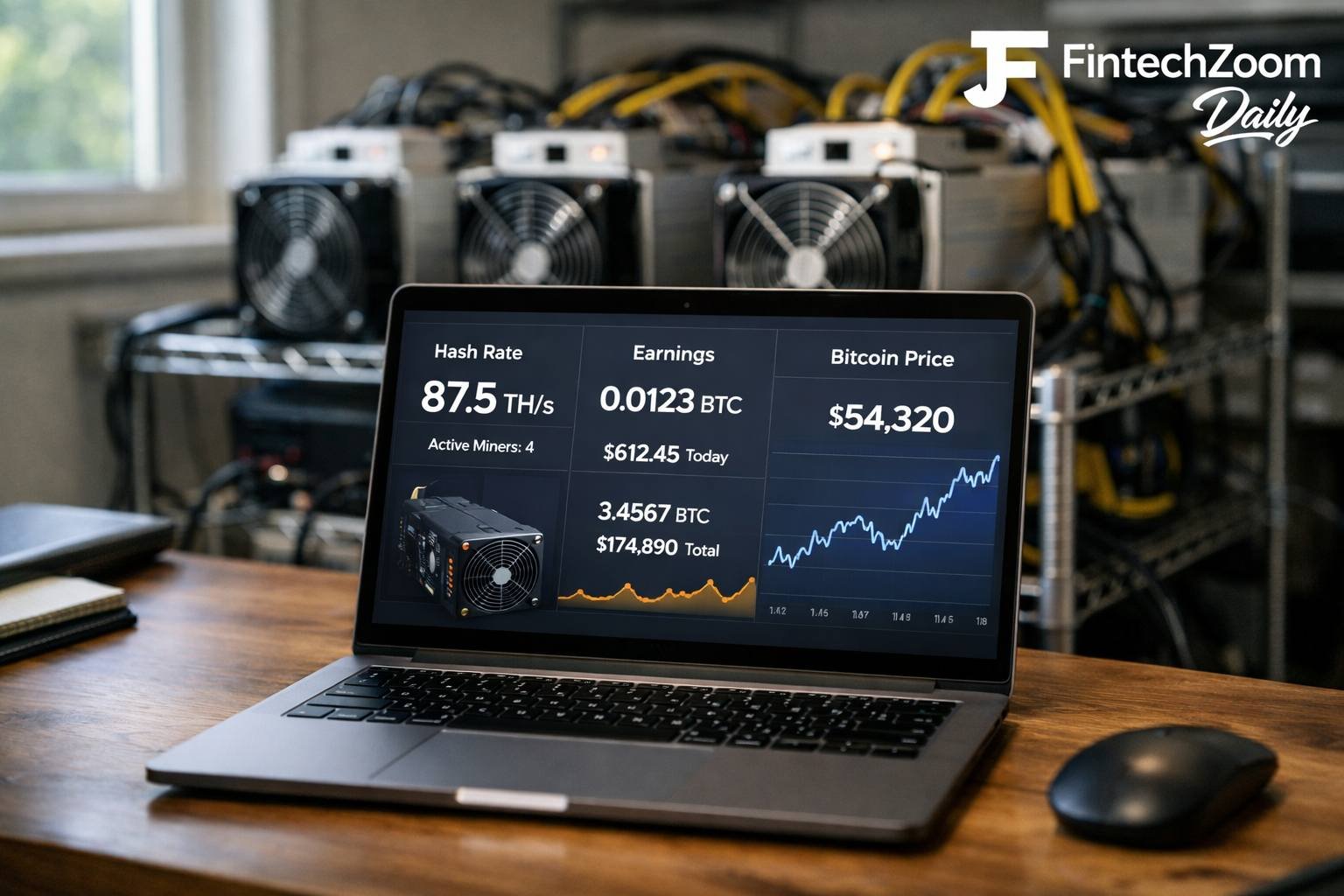
Bitcoin mining has always been one of the most talked-about ways to earn from cryptocurrency, but in 2026, things are no longer as simple as they used to be. With rising costs, stronger competition, and changing market conditions, many people are now asking a serious question: is it still worth getting into mining today?
At its core, Bitcoin mining is the process that keeps the network running and secure. Miners validate transactions and, in return, earn rewards. But over the years, this process has become more complex and expensive, making it harder for beginners to enter the space without proper planning.
If you have been exploring crypto opportunities, you have likely come across detailed insights on platforms like FintechZoom.com, where mining is often discussed alongside broader market trends. That is because mining is no longer just a technical activity, it is a financial decision that requires careful evaluation.
In this guide, we will break down how Bitcoin mining works today, what it really costs in 2026, and whether it can still be a profitable venture for individuals or if it is now dominated by large-scale operations.
How Bitcoin Mining Actually Works
Bitcoin mining is the process that keeps the Bitcoin network running smoothly. It is how new transactions are verified and added to the blockchain, which is the public record of all Bitcoin activity.
When someone sends Bitcoin, that transaction does not get confirmed instantly. Instead, it is grouped with other transactions into a block. Miners compete to solve a complex mathematical problem, and the first one to solve it gets the right to add that block to the blockchain. As a reward, the miner earns newly created Bitcoin along with transaction fees.
This system is known as proof of work, and it plays a crucial role in maintaining security. Because solving these problems requires significant computing power, it prevents bad actors from easily manipulating the network.
In the early days, mining could be done using a regular computer. Today, it requires specialized machines called ASIC miners, which are designed specifically for solving these complex calculations efficiently. These machines run continuously and consume a large amount of electricity.
Mining is not just about earning rewards. It is also about supporting a decentralized system where no single authority controls the network. Every miner contributes to keeping the system transparent and secure.
What Has Changed in Bitcoin Mining by 2026
Bitcoin mining in 2026 looks very different from what it was just a few years ago. The biggest shift comes from increased competition and a much higher level of difficulty in solving mining problems.
As more miners join the network, the system automatically adjusts the difficulty to maintain a consistent block time. This means that even with better machines, it is harder to earn rewards compared to the past. What once worked with basic setups now requires serious investment and planning.
Another major change is the rise of large-scale mining operations. Big companies now run massive mining farms with thousands of machines, often located in regions where electricity is cheaper. These industrial setups have a clear advantage over individual miners, making it difficult for small players to compete on their own.
The Bitcoin halving event has also had a strong impact. Over time, the reward for mining new blocks gets reduced, which directly affects earnings. By 2026, miners are earning fewer Bitcoins per block than before, meaning profitability depends more on efficiency and market price than ever.
Technology has improved as well. Modern ASIC machines are far more powerful and energy-efficient, but they also come at a higher upfront cost. This creates a barrier for beginners who may not be ready to invest heavily from the start.
Overall, Bitcoin mining has shifted from a hobbyist activity to a highly competitive industry. Success now depends on strategy, cost control, and access to the right resources.
Cost of Bitcoin Mining in 2026
Understanding the cost of Bitcoin mining is essential before getting started. In 2026, expenses have increased significantly, and profitability depends heavily on how well you manage these costs.
The biggest expense is electricity. Mining machines run continuously, often 24/7, and consume a large amount of power. In regions where electricity is expensive, mining can quickly become unprofitable. This is why many large mining farms are located in areas with cheaper energy sources.
Another major cost is hardware. Modern mining relies on ASIC machines, which are specifically built for Bitcoin mining. These machines are powerful but expensive, and they can become outdated as newer models are released. Investing in the wrong hardware can reduce your chances of making a profit.
Cooling and setup also add to the overall cost. Mining machines generate a lot of heat, so proper ventilation or cooling systems are necessary to keep them running efficiently. Without this, performance can drop and equipment may get damaged over time.
Maintenance is another factor that many beginners overlook. Machines require regular monitoring, occasional repairs, and sometimes replacement parts. These ongoing costs can add up and affect long-term profitability.
In simple terms, Bitcoin mining in 2026 is no longer just about plugging in a machine and earning rewards. It requires a clear understanding of expenses and careful planning to ensure that the returns justify the investment.
Is Bitcoin Mining Still Profitable in 2026
Profitability in Bitcoin mining today is no longer straightforward. It depends less on “whether mining works” and more on who is mining, where, and how efficiently they operate.
For large-scale operators, mining is still a viable business. These companies secure cheaper electricity, buy hardware in bulk, and run optimized setups. Their margins are tighter than before, but the scale keeps them profitable.
For individuals, the situation is very different. Running a single machine at home often leads to minimal returns, especially if electricity prices are average or high. In many cases, earnings barely cover the monthly power bill.
Instead of asking “Is mining profitable?”, a better question is:
Can you mine cheaper than the market value of Bitcoin?
If your cost to produce one Bitcoin is lower than its market price, you are in profit. If not, you are operating at a loss.
Another shift in 2026 is predictability. Mining rewards are smaller due to past halvings, and competition is stronger. This means profits are thinner and require long-term planning rather than short-term expectations.
For most beginners, joining a mining pool is the only realistic way to earn consistently. Even then, returns are shared and usually modest unless supported by efficient hardware and low running costs.
So yes, Bitcoin mining is still profitable in 2026, but it has become a strategy-driven activity, not an easy opportunity. Without the right setup, it can quickly turn into an expensive experiment.
Can Beginners Still Start Bitcoin Mining Today
Getting into Bitcoin mining as a beginner in 2026 is possible, but it is no longer beginner-friendly in the traditional sense. The entry barrier is higher, both financially and technically, which means new miners need to approach it with realistic expectations.
The first challenge is setup cost. Unlike earlier years, you cannot start with basic hardware. A proper ASIC machine, along with a stable power setup and cooling, is essential. This upfront investment alone can discourage many newcomers.
Then comes the learning curve. Mining is not just about running a machine. You need to understand hash rates, power consumption, mining pools, and how rewards are calculated. Without this knowledge, it is easy to make decisions that reduce profitability.
Some beginners look at cloud mining as an easier option. While it removes the need for hardware, it comes with its own risks. Many platforms offer low returns, and some are not fully transparent, which makes careful research important before investing.
A more practical approach for beginners today is joining a mining pool. This allows you to combine your computing power with others and earn smaller but more consistent rewards. It does not guarantee high profits, but it reduces uncertainty compared to solo mining.
In simple terms, beginners can still enter the mining space, but success depends on how well they understand the process and manage their costs from the start.
Alternatives to Bitcoin Mining
For many people in 2026, Bitcoin mining is no longer the most practical way to enter the crypto space. High costs and strong competition have pushed individuals to explore simpler and more flexible alternatives.
One of the most straightforward options is buying Bitcoin directly. Instead of investing in hardware and electricity, you can purchase Bitcoin and hold it over time. This removes operational stress and makes it easier to manage your investment.
Another option is participating in mining pools without owning large setups. While this still involves mining, it reduces risk by sharing rewards and lowering the need for heavy infrastructure.
Some investors also explore staking, although this applies to other cryptocurrencies rather than Bitcoin. Staking allows you to earn rewards by holding coins in a network, without the need for expensive machines or high electricity usage.
There are also passive strategies like dollar-cost averaging, where you invest small amounts regularly instead of making large one-time investments. It spreads risk instead of relying on one entry point.
For beginners especially, these alternatives often provide a more accessible and less risky entry point compared to setting up a full mining operation.
FAQs
1. Is Bitcoin mining legal in all countries?
No, Bitcoin mining is not legal everywhere. Some countries allow it freely, while others have restrictions or complete bans due to high energy consumption or regulatory concerns. Check your country’s crypto rules before you begin.
2. How much does it cost to mine one Bitcoin in 2026?
The cost varies depending on electricity rates, hardware efficiency, and location. In many cases, it can range from thousands to tens of thousands of dollars, making cost management a key factor in profitability.
3. Can I mine Bitcoin on my laptop or PC?
No, mining Bitcoin on a laptop or regular PC is no longer practical. Modern mining requires specialized ASIC hardware, as standard devices cannot compete with the current network difficulty.
4. What is the best hardware for Bitcoin mining?
Bitcoin mining now relies on specialized ASIC machines. The latest models offer better efficiency and performance, but they also come with higher upfront costs.
5. Is cloud mining worth it in 2026?
Cloud mining can be convenient, but it often comes with lower returns and higher risks. Some platforms are not transparent, so careful research is necessary before investing.
David Harvey is a Financial Markets Analyst specializing in global markets, investing trends, fintech innovation, cryptocurrency and economic developments. He focuses on delivering data-driven financial analysis and simplified market insights for modern readers and investors.